The Kelly Criterion Is Not a Suggestion — It Is a Mathematical Execution Order
Every bettor who types "how much should I bet" into a search bar is already losing money, because the answer was solved in 1956 by John Kelly Jr. at Bell Labs, and it has been ignored by 99% of casino players ever since. The Kelly Criterion is not a bankroll suggestion — it is a hard mathematical boundary that tells you the exact fraction of your capital to risk on a positive expected value wager. Ignore it and the house edge does not need to beat you; your own overbetting will do the job faster.
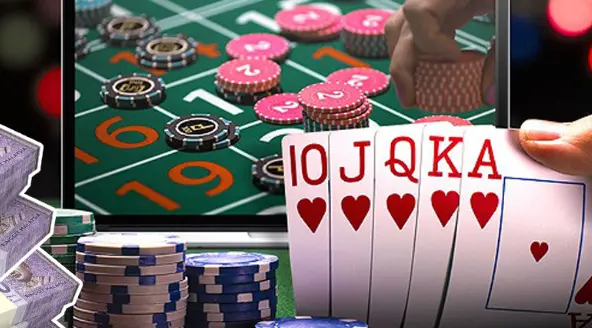
The Formula That Separates Professionals From Donors
The raw equation is brutal in its simplicity: f = (bp - q) / b, where f is the fraction of your bankroll to wager, b is the net odds received on the bet, p is the probability of winning, and q is the probability of losing. If that fraction comes out negative, you do not bet. Period. No gut feeling, no "due for a hit" nonsense, no chasing. The Kelly Criterion casino application means that on a game like blackjack with a 1% player edge and even-money payout, your optimal stake is roughly 1% of your total bankroll — not 10%, not 25%, and absolutely not "whatever feels right."
Here is where the algorithm gets vicious. The Kelly fraction maximizes the logarithmic growth of your wealth over infinite trials. Bet more than Kelly and your long-run growth rate actually declines — you are mathematically guaranteeing ruin even with a genuine edge. This is the part that tilt-driven gamblers never internalize: overbetting a positive EV opportunity converts it into a negative EV disaster. 😤

Why Casinos Love the Overbetter More Than the Degenerate
From a hardware and pit-audit perspective, the casino floor is engineered around the assumption that you will not calculate optimal bet sizing. Table limits, comp structures, and the psychological pull of "press your bet when you're hot" are all designed to push you past the Kelly boundary. The degenerate who bets everything on red is loud but irrelevant to the bottom line. The real profit center is the skilled player who knows the edge exists but stakes 5x or 10x the Kelly fraction — that player has a positive EV per hand but a negative geometric growth rate, and the house collects the difference through variance alone.
Run the numbers on a 1.5% edge with 20% of bankroll wagered per round. The probability of ruin approaches certainty within a few hundred hands. Cut that stake to the Kelly-optimal 1.5% and the same edge compounds your bankroll with a ruin probability that is effectively zero over any realistic session length. Same edge, same game, same odds — completely opposite outcomes based purely on fractional staking.
Fractional Kelly: The Only Real-World Compromise
Full Kelly is mathematically optimal for growth rate but produces drawdowns that will shatter your nerve. A 50% bankroll swing is not rare under full Kelly, and most humans cannot execute the strategy through that kind of pain. The professional answer is fractional Kelly — typically half-Kelly or quarter-Kelly — which sacrifices a small amount of theoretical growth rate for a massive reduction in variance. Half-Kelly retains about 75% of the optimal growth rate while cutting the standard deviation of returns roughly in half.
This is not a soft recommendation. It is an operational parameter. If you cannot stomach the swings, you reduce the fraction. If you reduce the fraction below the threshold where your edge still overcomes the house's baked-in take, you should not be sitting at the table at all. The math does not care about your feelings, your "system," or the pattern you think you saw in the last 40 spins. 🎯
Applying Kelly to Sports Mispricing and Table Games
Sports betting markets occasionally misprice outcomes by 2% to 4% when public money floods one side. That is a genuine Kelly opportunity — but only if you can accurately estimate the true probability, which requires a model sharper than the closing line. Most bettors overestimate their edge, plug an inflated p into the formula, and stake three times what Kelly demands. The result is indistinguishable from random gambling.
On table games, the edge is either built into the rules or extracted through card counting and advantage play. In either case, the Kelly fraction is tiny — often under 1% of bankroll per decision — because the edge is thin and the variance is high. Baccarat, roulette, and slots have negative Kelly fractions on every bet, meaning the only correct stake is zero. The Kelly Criterion does not negotiate with negative expectation.
The final operational rule: recalculate the fraction after every bankroll change, because the stake is always a percentage, never a fixed dollar amount. A 100-unit bankroll at 2% Kelly means 2 units. Drop to 50 units and the next bet is 1 unit. The fraction stays constant; the absolute number bleeds down automatically during a losing streak and scales up during a run. That self-correcting mechanism is the entire point — and it is the one feature that every broken gambler's "betting system" lacks.