Live Bac Bo Strategy – How Does This Game Work?
Live Bac Bo is a revolutionary fusion of baccarat and sic bo that has taken the live dealer ecosystem by storm 🎲. Unlike traditional baccarat, where cards dictate outcomes, this game replaces card drawing with a pair of dice, creating a faster, more transparent, and electrifying experience. The core mechanic is simple: two dice are rolled, and their combined total determines whether the Player or Banker side wins. If both dice land on the same number, it triggers a special event that can multiply payouts exponentially. Understanding these dynamics is the foundation of any serious Live Bac Bo strategy.
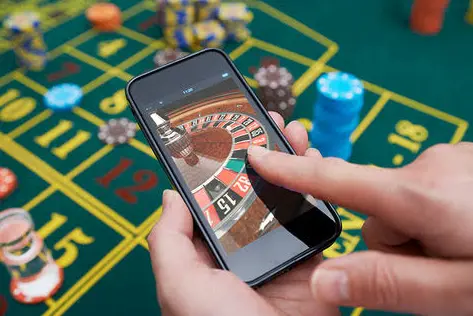
Core Gameplay Mechanics and Dice Resolution
At the start of each round, a live dealer shakes two dice inside a transparent tumbler. The sum of both dice is compared against a fixed threshold of 11. A total of 11 or higher means the Player side wins, while a total of 10 or lower means the Banker side wins. This binary outcome mirrors baccarat's natural win conditions but eliminates the psychological element of card counting. The critical nuance lies in the tie condition: when both dice show identical values, the game enters a "Double" state where the payout for the winning side doubles. This is where a refined Live Bac Bo strategy becomes indispensable, as the probability of doubles significantly alters the house edge calculation.
Probability Distribution and Odds Analysis
Statistically, the sum of two six-sided dice produces 36 possible combinations. A total of 11 or higher appears in 15 combinations (41.67%), while 10 or lower appears in 21 combinations (58.33%). This asymmetry favors the Banker side in raw frequency, but the payout structure balances the equation. A Banker win typically pays 0.95:1, whereas a Player win pays 1:1. The double event adds a layer of complexity: the probability of a double is 6/36 (16.67%), and when it occurs, both Player and Banker payouts multiply by 2x. A professional-grade Live Bac Bo strategy must incorporate these exact percentages into a dynamic betting model rather than relying on intuition 🎯.

Bankroll Management and Bet Sizing
Even the most mathematically sound approach collapses without disciplined capital allocation. A common framework used by high-rolling veterans is the 1-3-2-6 system, adapted for Bac Bo's double-trigger variance. Start with one unit on Banker, then increase to three units after a win, revert to two after a loss, and cap at six during a double streak. This sequence capitalizes on the 16.67% double probability while shielding your bankroll from consecutive losses. Additionally, setting a hard stop-loss at 20% of your total session budget prevents emotional decision-making during a cold streak. Remember, the dice have no memory — each roll is independent, so your staking plan must be resilient, not reactive.
Exploiting Double Events with Hedging Techniques
Advanced practitioners often deploy a hedge bet on the tie/double outcome when the table is trending toward high-frequency doubles. Since the double payout is 2x, a small side wager on the double event can offset losses from the main bet during volatile sequences. However, this is not a passive strategy; it requires real-time tracking of the last 20 to 30 outcomes to identify clustering patterns. While the dice are random, short-term streaks do occur, and a hybrid betting approach — 70% on the dominant side, 30% on the double hedge — can yield a positive expected value over a large sample size. The key is to remain flexible and adjust your exposure as the session evolves 🎰.
Live Dealer Interface and Psychological Edge
The live dealer format adds a human element that pure RNG games lack. Observing the dealer's rhythm, the timing between rolls, and the visual confirmation of dice values reduces the suspicion of manipulation and enhances trust. Seasoned players use this transparency to maintain focus and avoid tilt. Moreover, the chat feature allows you to gauge collective sentiment — when the table is overwhelmingly betting on Banker, a contrarian Player bet can sometimes capitalize on the herd mentality. This psychological layer is often overlooked but constitutes a legitimate component of a comprehensive Live Bac Bo strategy.
Session Duration and Volatility Control
Bac Bo's rounds last approximately 30 seconds, meaning a single session can encompass over 100 outcomes. This high velocity amplifies both potential profits and losses. To control volatility, limit your session to 45 minutes with a mandatory 10-minute break. During the break, review your bet log and calculate your actual win rate versus the theoretical 58.33% Banker probability. If your win rate deviates by more than 8%, adjust your bet sizing or switch tables. This data-driven feedback loop separates recreational players from consistent winners 🧠.
Integrating Side Bets and Bonus Multipliers
Many live Bac Bo tables offer side bets on exact dice sums (e.g., total of 7 or 12) with payouts ranging from 5:1 to 30:1. While these bets carry a higher house edge, they can be strategically deployed during a double-heavy streak to amplify returns. For instance, after two consecutive doubles, a small wager on a total of 12 (which requires a double six) pays 30:1 and aligns with the double trend. The trick is to treat side bets as lottery tickets, not core wagers — never allocate more than 5% of your session bankroll to them. This balanced approach keeps the main strategy intact while adding a thrill factor.
Table Selection and Dealer Rotation Patterns
Not all Bac Bo tables are created equal. Some studios use physical dice with slight imperfections, while others use RNG-assisted tumblers. Always choose tables with a high-definition camera angle that clearly shows the dice faces. Furthermore, observe dealer rotations — a new dealer often resets the dice sequence, which can disrupt streak-based strategies. If you notice a dealer change, pause for five rounds to re-establish the pattern. This meticulous attention to environmental variables is what separates a theoretical strategy from a practical, profitable execution 🎲.